Showing posts with label runequest culture. Show all posts

Tuesday, November 3, 2015

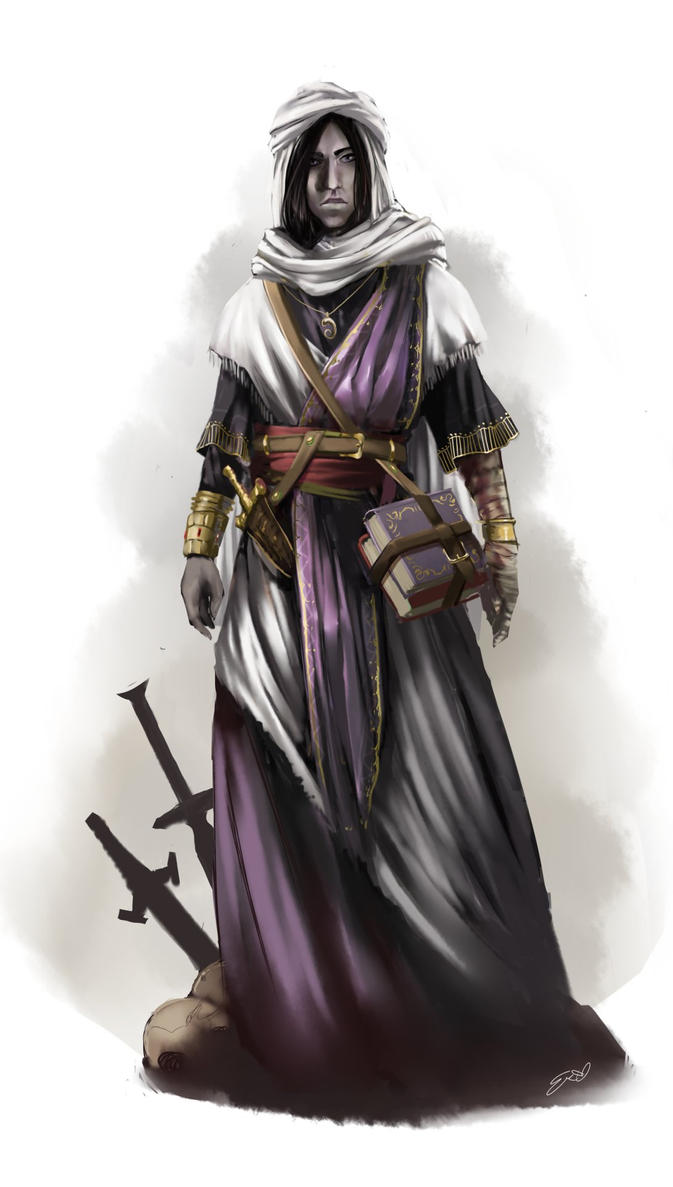
Cultures of Khamaz: Salmukaran

Salmukaran (Civilized Culture; Language: High Agadic)

Standard Skills
Deceit, Endurance, Influence, Insight, Locale, Perception, Sing

Combat Style: Salmukaran Alubari
As a recent refugee community, Salmukarans have worked hard to develop and maintain basic fighting skills throughout the lower orders (alubari), who are trained with spear, dagger, hatchet, and sling. [Cultural Style - Lower]

Combat Style: Salmukaran Pahi
Primarily fights with spear and hoplite shield; also trained in mace, akinaka shortsword, dagger, javelin, sling, and short bow. [Cultural Style - Upper]

Defensive Fighting (Salmukaran Pahi Benefit)
When parrying a blow during combat, a Salmukaran pahi's weapon is considered one step higher in size.

Professional Skills
Craft (any), Commerce, Language (any), Literacy, Lore (any), Musicianship, Streetwise, Teach

Specialist Careers
Shangu Priest

Cults
Societies: Brotherhood of Merchant Venturers, Diggers College, Inkashic Brewers Guild, Magisterium
Theist Cults: The Dustmen, The Gate Walkers, The God Hunters, The Lost, The Star Synod

An ancient and proud people, Salmukarans were the first people in the world blessed with the sacred parşu of civilization, and with it, they built the first estates of the gods from the black land of the sacred rivers in Khamaz. Their cities were rich and majestic, their knowledge expansive and revolutionary. But with this wealth and bounty came conflict and envy, and Salmukarans have a long history of fighting to protect the blessings of the gods from those who would take them for themselves.

Even in exile, with the Doom of Nibiru shattering their lands and cities and casting the rubble down into the Star Sea, Salmukarans carry the gods and their sacred parşu with them. New lands will be found. New estates will be built. Atlantis, Borea, the Crescent Kingdoms, all have enjoyed the fruits of the Salmukarans’ first plucking. Now they can repay that bounty, in full.

Wednesday, October 21, 2015

Cultures of Hrimgate: Vandal

This culture was created by Rich Forest for his War in the North Campaign last year. The original can be found at Superhero Necromancer

Vandal (Civilized Culture; Language: High Atlantean)

Standard Skills
Athletics, Endurance, Deceit, Influence, Insight, Locale, Willpower

Combat Style: Vandal Levy
Primarily fight with spear and viking shield; also trained with longspear, javelin, dagger, hatchet, and battle axe. [Cultural Style - Lower]

Combat Style: Vandal Soldier
Primarily fight with spear and viking shield or sword and viking shield; also trained with longspear, javelin, dagger, hatchet, battle axe, jǫtunn axe (great axe). [Cultural Style - Upper]

Formation Fighting (Vandal Soldier Benefit)
Permits a group of three or more warriors to draw into close formation, placing more open or disordered opponents at a disadvantage (provided the ‘unit’ cannot be outflanked) and thus reducing each foe’s Action Points by one if they engage.

Professional Skills
Art (any), Craft (any), Courtesy, Language (any), Lore (any), Navigation, Seamanship, Streetwise

Specialist Careers
Seafarer, Varangian, Viking

Cults
Societies: Diggers College, Magisterium 
Sorcery Cults: The Atlantean Conclave
Theist Cults: Old Hoary Beard, Sail Filler, Tree Breaker

The Vandals first served as mercenaries in Atlantean armies hundreds of years ago. Today, there is a Vandal kingdom on the northwest coast of Atlantis itself. Vandals still fight alongside Atlantean Kingdoms against the rising threat of the Asturian Empire, with its undead hordes. 

Vandals are common along the northern coasts of Atlantis and southern coasts of Borea. When seen, it is often in the company of Atlanteans, either as traders, as bodyguards, as mercenary recruiters, or as scholars. Most Vandals speak High Atlantean, but their scholars and elites study the old Vandal tongue, which was closely related to the tongues of the Hothar, Iotar, and Thiudar. These scholars travel the world to learn the legends of Old Hoary Beard, the Sail Filler, the Tree Breaker, the one northern god still worshiped among the Vandal people.

Tuesday, September 8, 2015

Cultures of Hrimgate: Atlantean

This culture for the Magisterium Campaign is a slightly tweaked version of the Atlantean culture posted to Superhero Necromancer last year for Rich Forest's War in the North Campaign


Atlantean (Civilized Culture; Language: High Atlantean)

Standard Skills
Customs, Influence, Insight, Locale, Perception, Ride, Willpower

Combat Style: Atlantean Civilian
A more limited style, using quarterstaff, dagger, and knife. At range, sling or short bow.

Combat Style: Atlantean Guard
Quarterstaff. Also dagger, knife, shortsword, and trident and net. At war, pike, glaive, longspear. At range, sling or short bow.

Cautious Fighter (Atlantean Guard Benefit) 
Can use the Change Range action to automatically withdraw from engagement with no need to roll.

Professional Skills
Art (Any), Commerce, Craft (any), Language (any), Literacy, Lore (any), Navigation, Seamanship

Specialist Careers

Cults
Societies: Diggers College, Fraternity of Inner Light, Magisterium 
Sorcery Cults: The Atlantean Conclave, The Atlantean Mysteries
Theist Cults: Sol Invictus (worshipped by the Mehari, Atlanteans from the Northeastern High Countries)

Atlanteans originally hail from the city of Atlantis, far to the the distant south in a land of glittering cities, steaming jungles, and sorceries undreamt of in Borea. The Atlantean Kingdoms fight a war on two fronts, one with the rising Asturian Empire that sits between them and the North, and another with the Serpent Kingdoms that sit at the heart of the continent of Atlantis.

There are many Atlanteans in Andrassos. Most who appear are merchants. Some are here to recruit Andrassan and Varangian mercenaries for their armies. Some are here to keep an eye on the Andrassans and their dabbling with the Vanoran sorceries of old. The Atlanteans remember their one and only war with Vanor and do not wish to see the Exarchate follow in the footsteps of Asturias.

Atlanteans do not worship the gods, nor do they worship Sol, nor do they worship the spirits of the land. Each Atlantean worships “the god within.” They believe themselves to be a divine people, and through proper rites and practices, their divinity can be brought forth into the mortal world.

Monday, August 31, 2015

Cultures of Hrimgate: Iotar

This is an updated version of the Iotar culture originally published by Rich Forest on his Superhero Necromancer blog last year. The Iotar are one of the main cultures of his War in the North campaign, which also took place in the world of Hrimgate. This has been polished up for inclusion in the Magisterium Campaign.  

Iotar (Barbarian Culture; Language: Iorsk)

Standard Skills
Athletics, Boating, Brawn, Endurance, First Aid, Locale, Perception

Combat Style: Iotar Fighting
The purview of karls in Iotar society, this combat style uses spear and viking shield, with additional training in dagger, hatchet, and battle axe. [Cultural Style - Lower]

Combat Style: Iotar Shield Wall
Primarily fights with spear and viking shield or sword and viking shield; also trained with javelin, dagger, hatchet, battle axe, jǫtunn axe (great axe), short bow, long knife. [Cultural Style - Upper]

Shield Wall (Iotar Shield Wall Benefit)
Allows a group of three or more shield users to combine their protection, adding one to the number of locations which can be protected with passive blocking, and resisting Knockback, Leaping attacks and Bash as if using the Brace action.

Professional Skills
Commerce, Craft (any, esp. Farming, Animal Husbandry), Exhort, Lore (any), Navigation, Oratory, Seamanship, Survival

Specialist Careers
Varangian, Viking

Cults
Societies: Diggers College, Magisterium
Theist Cults: The most common cults among the Iotar are the Cult of the Nine Winds and the Cult of the Bock. Traders and travelers often favor Sail Filler or the Steady Hand, and raiders and vikings favor the Gullet, the Reavers, and Black Eagle. Those Varangians who fight for glory favor Eagle Head.

The first Iotar raiders came to the shores of the North over one hundred years ago, crashing upon those lands in waves, conquering and making them their own. They are the chieftains of most of the north, but currently face a strong challenge from the Snow Elf hegemony. Those Iotar in Andrassos and the Inner Sea are mainly Varangians, seeking fame, fortune, and freedom, with the dedicated huscarls of the Exarchate’s Varangoi Guard considered the most elite.

Wednesday, August 26, 2015

Cultures of Hrimgate: Lemurian

This is an updated version of the Lemurian culture published last year on this blog. It more closely reflects the particulars of the Magisterium Campaign.

Lemurian (Civilized Culture; Language: High Agadic)

Standard Skills
Deceit, Endurance, Influence, Insight, Locale, Perception, Sing

Combat Style: Lemurian Alubari (urban commoners)
As a recent refugee community, Lemurians have worked hard to develop and maintain basic fighting skills throughout the lower orders (alubari), who are trained with spear, dagger, hatchet, and sling. [Cultural Style - Lower]

Combat Style: Lemurian Pahi (urban elites)
Primarily fights with spear and hoplite shield; also trained in mace, akinaka shortsword, dagger, javelin, sling, and short bow. [Cultural Style - Upper]

Defensive Fighting (Lemurian Pahi Benefit)
When parrying a blow during combat, a Lemurian pahi's weapon is considered one step higher in size.

Professional Skills
Craft (any), Commerce, Language (any), Literacy, Lore (any), Musicianship, Streetwise, Teach

Specialist Careers
Shangu Priest

Cults
Societies: Brotherhood of Merchant Venturers, Diggers College, Inkashic Brewers Guild, Magisterium
Theist Cults: The Dustmen, The Star Synod


Far across the world ocean was once a mysterious land of ancient cities, fertile river valleys, and arid deserts, the true name of which was unknown by those in Borea or simply forgotten to time. Vanorans called it Lemuria and spoke tall tales of demon lizard shibboleths and gods in living form ruling the land from great temple platforms in its cities. Older than Vanor, more ancient than Stygia, more antique perhaps than even Hyperborea and Atlantis, Lemuria was a primordial land -- the Garden of the Sun -- known only to those who could see into the Deep.

And then, within the living memory of only the most wizened elder, a great calamity befell Lemuria, and the land was gone.

But not its people.


The first refugees to Borea came as but a trickle, isolated landings in great sailing ships whose passengers carried statues of their gods and lamented the coming of Nibiru. Soon, a great flood of humanity swept across Borea, spreading throughout the southern lands of the continent from east to west. A proud people brought low by disaster, the arriving Lemurians were not content to remain as refugees and castoffs in a foreign land, and they soon turned their attentions to carving new homes into the face of the land.

Today, Lemurian communities are found throughout the South, both in Stygia and along the Southern Reach. In some lands, they are a useful but distrusted minority, using their past learning and cultural knowledge as a currency to buy new stations from the old elites. In others, however, they have become lords and conquerors themselves. As lords and elites plot to destroy their enemies and armies prepare to clash across the South, Lemurians watch the preparations warily. They will not lose all they have regained so easily. The Doom will not befall them again.


Tuesday, August 25, 2015

Cultures of Hrimgate: Andrassan

Andrassan (Civilized Culture; Language: South Vanoran)

Standard Skills
Conceal, Deceit, Influence, Insight, Locale, Perception, Ride

Combat Style: Akritoi Light Infantry
Trained as skirmishers to fight with short bow and javelin, but also some rudimentary training with spear, dagger, and hatchet. [Cultural Style - Lower]

Combat Style: Psiloi Garrison
Trained primarily as garrison and support troops, using the light crossbow, shortsword, dagger, and hatchet. [Cultural Style - Lower]

Combat Style: Andrassan Koursorses
Primarily fights with Andrassan kontarion lance, toxon bow (recurve), bardoukion war mace, and kite shield, usually on horseback, but can also be deployed on foot. Has further training in spathion (sword), dagger, and shortsword. [Cultural Style - Upper]

Mounted Combat (Andrassan Koursorses Benefit)
This combat benefit allows the rider to ignore the skill cap placed upon combat rolls by the Ride skill. 

Professional Skills
Art (any), Bureaucracy, Commerce, Courtesy, Language (any), Literacy, Lore (any), Seduction

Specialist Careers
Adventurer of Vanor, Andrassan Assassin, Andrassan Cataphract, Monk, Skutatoi Heavy Infantry, Sol Priest


Cults
Societies: Brotherhood of Merchant Venturers, Fascinarium, Fraternity of Inner Light, Magisterium
Sorcery Cults: Adelphic Society of War Fire, Arsaphian Codex, The Atlantean Mysteries, The Daemon Hexes, Invidentia Vanorum, Pharmakon of Sarturius Duro, The Umbral Way, The Victarian Mysteries
Theistic Cults: Sol Invictus (the Unconquered Sun) and the following aspect cults - the Martial Sun, plus any family/ancestor cults appropriate and custom to a character

In the waning days of the Vanoran hegemony, when Imperial control fell away from far-flung exarchates and Vanoran civilization withered to a husk, some areas were able to survive. Andrassos was one such land. Perched on a rocky peninsula overlooking the Sea of Ainos (where the Inner and Axial Seas meet) and behind virtually impregnable walls, the city of Andrassos remained a bastion of civilization and order as barbarous hordes and invading armies brought old Vanor low. 

But that does not make Andrassans complacent. Although one of the richest cities in all of Borea, its resources are not infinite. Although protected by high walls and an army of highly trained cataphracts, its borders are not secure. Although blessed with a legacy of civic prosperity and mature culture, its enemies both foreign and domestic are relentless in their desire to seize, plunder, and conquer. Thus, Andrassan society has adapted accordingly, embracing the politics of diplomacy and subterfuge, the application of power through secrecy, and the leveraging of economic power to keep threats to their way of life off balance and unsure. Considered schemers and cowards by some, Andrassans care little about the opinions of others on this matter. Their way of life will endure.

Thursday, October 2, 2014

Cultures of Hrimgate: Vanoran

Vanoran (Civilized Culture)

Standard Skills
Conceal, Deceit, Drive, Influence, Insight, Local, Willpower

Combat Style: Citizen Legionary
[Cultural Style] Vanoran citizen legionnaires wield the shortsword and scutum. They carry a dagger at their side, and fight also with shortspears and javelins. They too have archers trained in the short bow.

Formation Fighting (Benefit)
Permits a group of three or more warriors to draw into close formation, placing more open or disordered opponents at a disadvantage (provided the ‘unit’ cannot be outflanked) and thus reducing each foe’s Action Points by one if they engage.

Professional Skills
Bureaucracy, Commerce, Craft (any), Courtesy, Engineering, Languages (any), Lore (any), Oratory

Once citizens of a continent-spanning empire of old, today Vanorans populate many scattered lands throughout central Borea. Some have blended with other local peoples and become indistinguishable from the rest, while others have clung to their longstanding culture and heritage, confident old Vanor will rise once again from ruin to stand astride Borea.

Hardy and industrious, glory-seeking and arrogant, Vanorans have found it difficult to accept their current place in Hrimgate. Those who have moved on, as in Asturias and Andrassos, have embraced new covenants and creeds, new traditions and superstitions. But for many throughout the Riverlands, Transtygia, and the Southern Reach, the older ways remain strong. And deep within mist-shrouded Arborea, tens of thousands still live amid the ruins of Vanor itself.

The dreams of empire die hard.


Thursday, July 17, 2014

Cultures of the South: Lemurian

Lemurian (Civilized Culture)

Standard Skills
Deceit, Endurance, Influence, Insight, Locale, Perception, Sing

Combat Style: Lemurian Alubari (urban commoners)
As a recent refugee community, Lemurians have worked hard to develop and maintain basic fighting skills throughout the lower orders (alubari), who are trained with short spear, dagger, hatchet, and sling. [Cultural Style - Lower]

or

Combat Style: Lemurian Pahi (urban elites)
Primarily fights with short spear and hoplite shield; also trained in mace, akinaka short sword, dagger, javelin, sling, and short bow. [Cultural Style - Upper]

Defensive Fighting (Benefit)
When parrying a blow during combat, a Lemurian pahi's weapon is considered one step higher in size.

Professional Skills
Craft (any), Commerce, Language (any), Literacy, Lore (any), Musicianship, Streetwise, Teach

Far across the world ocean was once a mysterious land of ancient cities, fertile river valleys, and arid deserts, the true name of which was unknown by those in Borea or simply forgotten to time. Vanorans called it Lemuria and spoke tall tales of demon lizard shibboleths and gods in living form ruling the land from great temple platforms in its cities. Older than Vanor, more ancient than Stygia, more antique perhaps than even Hyperborea and Atlantis, Lemuria was a primordial land -- the Garden of the Sun -- known only to those who could see into the Deep.

And then, within the living memory of only the most wizened elder, a great calamity befell Lemuria, and the land was gone.

But not its people.

The first refugees to Borea came as but a trickle, isolated landings in great sailing ships whose passengers carried statues of their gods and lamented the coming of Nibiru. Soon, a great flood of humanity swept across Borea, spreading throughout the southern lands of the continent from east to west. A proud people brought low by disaster, the arriving Lemurians were not content to remain as refugees and castoffs in a foreign land, and they soon turned their attentions to carving new homes into the face of the land.

Today, Lemurian communities are found throughout the South, both in Stygia and along the Central Coast. In some lands, they are a useful but distrusted minority, using their past learning and cultural knowledge as a currency to buy new stations from the old elites. In others, however, they have become lords and conquerers themselves. As armies prepare to clash across the South, Lemurians watch the preparations warily. They will not lose all they have regained so easily. The Doom will not befall them again.


Tuesday, July 15, 2014

Cultures of the South: Stygian

Stygian (Civilized Culture)

Standard Skills
Athletics, Boating, Dance, Deceit, Influence, Locale, Willpower

Combat Style: Stygian Soldier 
[Cultural Style] Primarily fights with two weapons, mixing and matching Stygian shamshir sword (scimitar), sagaris axe (one-handed battle axe), broad sword, shortspear; also trained with recurve bow, dagger, hatchet, and target shields.

Sweeping Strike (Benefit)
When dual wielding two weapons, a Stygian soldier can use a sweeping attack to push aside an enemy's defenses and immediately follow-up with another attack, as per the Flurry Special Effect. The follow-up attack must be with a different weapon than the triggering attack. Two weapons only.

Professional Skills
Bureaucracy, Commerce, Courtesy, Craft (any), Language (any), Lore (any), Musicianship, Seamanship

In the deep, distant past, Stygians were nomads and herders traveling a grass sea in a land far across the world ocean. But then that ended. They gave up their kumis, their goats, and their tent cities; built ships and learned the stars; and became nomads of the sea. That was then.

In the distant past, Stygian wayfarers made their first landings along the southwest coast of Borea, seeking plunder and good fortune. Instead, they found homes and bountiful resources, and soon the Stygian people drove their tent spikes deep into new, untamed earth. From this seed grew a great Empire, strong of ship and sail, dominant in commerce and trade, fierce in honor and pride. It spread north and east along the Borean coast, leaving its mighty stamp upon the world. And then the Witch-Kings of Vanor, covetous of all the western lands, descended on Stygia, bringing fire and war, and bent it under their yoke. That was then.

Today, the southwestern Borean coast contains the scattered seeds of Stygian hegemony, rich, discordant cities ancient in culture and distrustful of each other. Although the Vanoran boot is long removed, the scars of dominion remain, as no new Stygian Empire has thus been able to reemerge. Instead, new, hungry wolves prowl through the region: Atlantean wayfarers, dead Asturian legions, Lemurian refugees. The drums of war sound in the south, and it will be Stygian cities that will burn.


(This is something related to the War in the North campaign being run by my friend and co-blogger Rich Forest, which he has been writing about over on his Superhero Necromancer blog and will presumably link to here when he has the time. However, this is also related to a possible campaign I may run after War in the North is over, simply titled War in the South. There will be more coming. Enjoy!)