Showing posts with label rpg. Show all posts

Tuesday, November 3, 2015

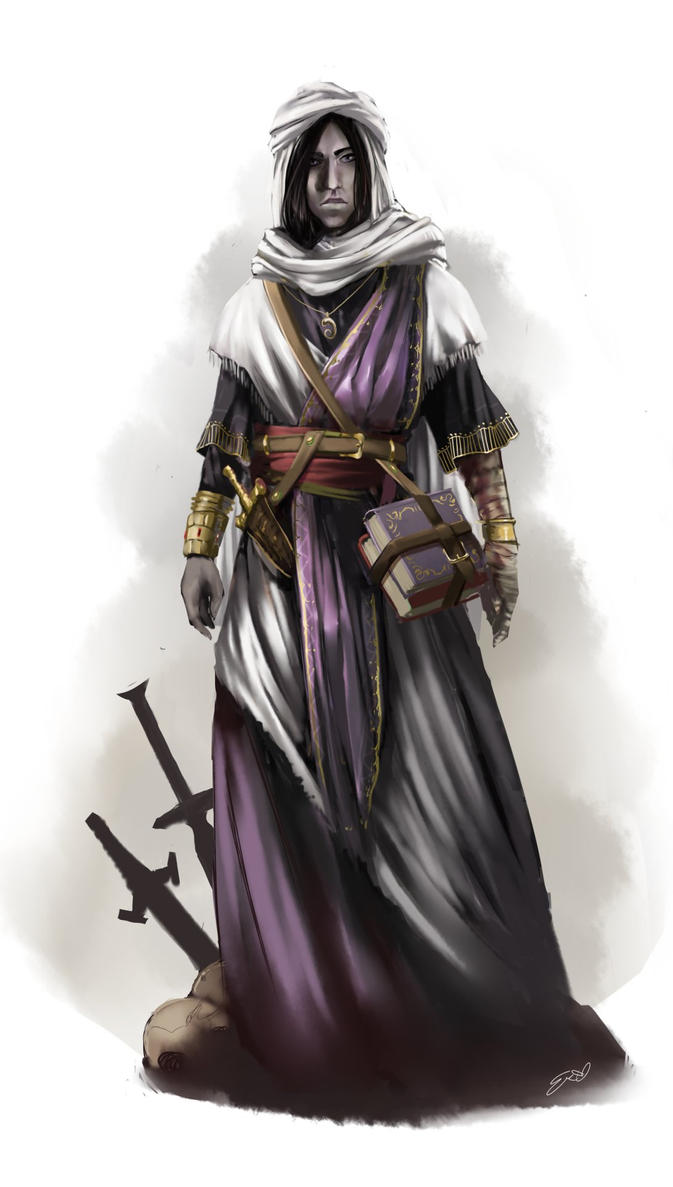
Cultures of Khamaz: Salmukaran

Salmukaran (Civilized Culture; Language: High Agadic)

Standard Skills
Deceit, Endurance, Influence, Insight, Locale, Perception, Sing

Combat Style: Salmukaran Alubari
As a recent refugee community, Salmukarans have worked hard to develop and maintain basic fighting skills throughout the lower orders (alubari), who are trained with spear, dagger, hatchet, and sling. [Cultural Style - Lower]

Combat Style: Salmukaran Pahi
Primarily fights with spear and hoplite shield; also trained in mace, akinaka shortsword, dagger, javelin, sling, and short bow. [Cultural Style - Upper]

Defensive Fighting (Salmukaran Pahi Benefit)
When parrying a blow during combat, a Salmukaran pahi's weapon is considered one step higher in size.

Professional Skills
Craft (any), Commerce, Language (any), Literacy, Lore (any), Musicianship, Streetwise, Teach

Specialist Careers
Shangu Priest

Cults
Societies: Brotherhood of Merchant Venturers, Diggers College, Inkashic Brewers Guild, Magisterium
Theist Cults: The Dustmen, The Gate Walkers, The God Hunters, The Lost, The Star Synod

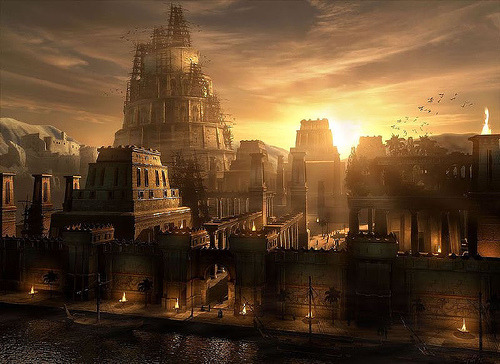
An ancient and proud people, Salmukarans were the first people in the world blessed with the sacred parşu of civilization, and with it, they built the first estates of the gods from the black land of the sacred rivers in Khamaz. Their cities were rich and majestic, their knowledge expansive and revolutionary. But with this wealth and bounty came conflict and envy, and Salmukarans have a long history of fighting to protect the blessings of the gods from those who would take them for themselves.

Even in exile, with the Doom of Nibiru shattering their lands and cities and casting the rubble down into the Star Sea, Salmukarans carry the gods and their sacred parşu with them. New lands will be found. New estates will be built. Atlantis, Borea, the Crescent Kingdoms, all have enjoyed the fruits of the Salmukarans’ first plucking. Now they can repay that bounty, in full.

Monday, November 2, 2015

The Cultures of Khamaz - The Lost Garden of the Sun

Far across the world ocean was once a mysterious land of ancient cities, fertile river valleys, and arid deserts, the true name of which was unknown by those in Borea or simply forgotten to time. Ancient Vanorans knew it as Khamaz and spoke tall tales of demon lizard shibboleths and gods in living form ruling the land from great temple platforms in its cities. Older than Vanor, more ancient than Mhedia, more antique perhaps than even Hyperborea and Atlantis, Khamaz was a primordial land -- the Garden of the Sun -- known only to those who could see into the Deep.

And then, within the living memory of only the most wizened elder, a great calamity befell Khamaz, and the land was gone.

But not its people.

The first refugees to Borea came as but a trickle, isolated landings in great sailing ships whose passengers carried statues of their gods and lamented the coming of Nibiru. Soon, a great flood of humanity swept across Borea, spreading throughout the southern lands of the continent from east to west. A proud people brought low by disaster, the arriving Khamazi peoples were not content to remain as refugees and castoffs in a foreign land, and they soon turned their attentions to carving new homes into the face of the land.

Today, Khamazi communities are found throughout the South of Borea, both along the eastern coasts and the Gleaming Isles and along the western shores of Mhedia and the Southern Reach. In some lands, they are a useful but distrusted minority, using their past learning and cultural knowledge as a currency to buy new stations from the old elites. In others, however, they have become lords and conquerors themselves. As lords and elites plot to destroy their enemies and armies prepare to clash across the South, Khamazi watch the preparations warily. They will not lose all they have regained so easily. The Doom will not befall them again.

---

The next several posts on Tales of Hrimgate will add flesh to the various Khamazi peoples that have migrated to Borea. All have been built with RuneQuest 6 in mind. The list below will be updated with appropriate links when posts go live.

Cultures


  • Salmukarans
  • Nashiri
  • Khurrite

Careers


  • Shangu Priest
  • Pirru Cavalry
  • Assaru Charioteer

Cults and Societies


  • The Pantheon of Khamaz: The Annunaki
  • The Star Synod
  • The Dustmen
  • The Keepers of the Great Deluge
  • The Gate Walkers
  • The God Hunters
  • The Cult of the Lost
  • The Inkashic Brewers Guild

Wednesday, October 21, 2015

Cultures of Hrimgate: Vandal

This culture was created by Rich Forest for his War in the North Campaign last year. The original can be found at Superhero Necromancer. 

Vandal (Civilized Culture; Language: High Atlantean)

Standard Skills
Athletics, Endurance, Deceit, Influence, Insight, Locale, Willpower

Combat Style: Vandal Levy
Primarily fight with spear and viking shield; also trained with longspear, javelin, dagger, hatchet, and battle axe. [Cultural Style - Lower]

Combat Style: Vandal Soldier
Primarily fight with spear and viking shield or sword and viking shield; also trained with longspear, javelin, dagger, hatchet, battle axe, jǫtunn axe (great axe). [Cultural Style - Upper]

Formation Fighting (Vandal Soldier Benefit)
Permits a group of three or more warriors to draw into close formation, placing more open or disordered opponents at a disadvantage (provided the ‘unit’ cannot be outflanked) and thus reducing each foe’s Action Points by one if they engage.

Professional Skills
Art (any), Craft (any), Courtesy, Language (any), Lore (any), Navigation, Seamanship, Streetwise

Specialist Careers
Seafarer, Varangian, Viking

Cults
Societies: Diggers College, Magisterium 
Sorcery Cults: The Atlantean Conclave
Theist Cults: Old Hoary Beard, Sail Filler, Tree Breaker

The Vandals first served as mercenaries in Atlantean armies hundreds of years ago. Today, there is a Vandal kingdom on the northwest coast of Atlantis itself. Vandals still fight alongside Atlantean Kingdoms against the rising threat of the Asturian Empire, with its undead hordes. 

Vandals are common along the northern coasts of Atlantis and southern coasts of Borea. When seen, it is often in the company of Atlanteans, either as traders, as bodyguards, as mercenary recruiters, or as scholars. Most Vandals speak High Atlantean, but their scholars and elites study the old Vandal tongue, which was closely related to the tongues of the Hothar, Iotar, and Thiudar. These scholars travel the world to learn the legends of Old Hoary Beard, the Sail Filler, the Tree Breaker, the one northern god still worshiped among the Vandal people.

Monday, September 14, 2015

Cults of Atlantis: The True Atlanteans

This mystic cult was designed by Rich Forest for the Magisterium Campaign.


The True Atlanteans

Atlantis is the city of paragons. Its people strive for excellence in their crafts, as it is through prowess that men and women reveal and honor the God Within. When an Atlantean comes closer to understanding the God Within, they begin to leave behind the limits of the body. True Atlanteans are not a class or caste apart. They are members of the community and neighborhood like all others. However, they are respected for their excellence and achievements, and their counsel is often sought and weighed heavily when wisdom is needed.


Atlantean

Starting Cultures: Atlantean
Starting Careers: Paragon
Standard Skills: Athletics, Endurance, Insight, Perception, Willpower
Professional Skills: Meditation, Mysticism

Students, Disciples, and Masters


Student: Aura (Confidence), Augment Craft (choose one), Augment Endurance, Augment Insight, Augment Lore (choose one), Augment (Willpower)
Disciple: Denial (Hunger and Thirst), Immunity (Disease), Immunity (Poison)
Master: Enhance (Healing Rate), Indomitable

Notes: Each True Atlantean develops mastery of one Craft or Lore--but only one. One of the True Atlantean’s starting disciplines must be either Augment Craft or Augment Lore. Whatever Craft or Lore is chosen, that is the only Craft or Lore that True Atlantean may learn to augment.  

Cults of the Inner Sea: The Atlantean Conclave

This sorcery cult was designed by Rich Forest for the Magisterium Campaign. 

The Atlantean Conclave

The Atlantean Conclave is an organization of Atlantean sorcerers of diverse backgrounds, ethnicities, and traditions who have banded together for mutual support and benefit in this strange northern city. The conclave provides tutelage and services for the Atlantean community of Andrassos and acts as an anchor for visitors and traders from Atlantis. Nearly all Atlanteans of note in Andrassos are members, including traders, local business people, Paragons, and seafarers. Most members are not themselves sorcerers. Every Atlantean sorcerer in Andrassos is a member of the conclave, with one exception: the mysterious founder of the cult of the Atlantean Mysteries keeps apart. The leaders of the Atlantean Conclave, for their part, disapprove of the actions of this mysterious rogue Atlantean who shares lost secrets with any wealthy local who joins that cult.

Only Atlanteans are allowed to join the conclave. 

Novices

Starting Cultures: Atlantean, Vandal
Standard Skills: Insight
Professional Skills: Courtesy, Culture (Andrassos), Invocation (Atlantean Conclave Sorceries), Language (South Vanoran), Literacy, Shaping
Shaping Taught: Duration (Long), Magnitude, Range, Targets

Apprentices, Adepts, Magi, and Archmagi

Apprentice Spells: Intuition, Mark, Spell Resistance, Telepathy
Adept Spells: Summon, Spirit Resistance, Store Manna
Mage/Archmage Spells: Neutralize Magic
Gifts: Perfection (mage/archmage gift)

Wednesday, September 9, 2015

Cults of Atlantis: The Society of Paragon Seafarers

The Society of Paragon Seafarers

The City of Atlantis is a city of seafarers. The people of Atlantis are the people of the sea. The highest expression of the god within is expertise, excellence, and prowess. Is it any wonder that among the Atlanteans the Paragon Seafarers have arisen? It is not. 

Paragon Seafarers have sailed Atlantean vessels around the entire circle of the world. Wherever Atlanteans are found, seafarers are among them, for it is the seafarer who brought them safely across dangerous waters. 

Sailors

Starting Cultures: Atlantean, Vandal
Starting Careers: Seafarer
Standard Skills: Boating, Endurance
Professional Skills: Craft (Shipboard Specialty), Meditation, Mysticism, Navigation, Seamanship

Students, Disciples, and Masters

Student: Augment Craft (Shipboard Specialty), Augment Endurance, Augment Navigation, Augment Seamanship
Disciple: Aura (Calm), Denial (Rain and Storms)
Master: Adhesion

Careers of Atlantis: Paragons and Seafarers

The following are two specialist careers for RuneQuest 6 characters using the Atlantean culture posted yesterday. These were created by Rich Forest for the world of Hrimgate.

Paragon (Atlantean Career)

Many Atlanteans seek unity with their own God Within. A paragon is one who has found it. Through this search the paragon gains great mastery of one or more skills and even of their own mind and body. Paragons are respected as heroes, leaders, and guides in Atlantean communities. 

Standard Skills
Athletics, Customs, Endurance, Influence, Insight, Perception, Willpower

Professional Skills
Craft (any), Culture (any), Language (any), Literacy (any), Lore (any), Meditation, Mysticism

Seafarer (Atlantean, Vandal Career)

Paragon Seafarers have sailed Atlantean vessels around the entire circle of the world. Wherever Atlanteans are found, seafarers are among them, for it is the seafarer who brought them safely across dangerous waters. 

Standard Skills
Athletics, Boating, Brawn, Endurance, Perception, Swim, Willpower

Professional Skills
Craft (Shipboard Specialty), Culture (any), Language (any), Meditation, Mysticism, Navigation, Seamanship


Tuesday, September 8, 2015

Cultures of Hrimgate: Atlantean

This culture for the Magisterium Campaign is a slightly tweaked version of the Atlantean culture posted to Superhero Necromancer last year for Rich Forest's War in the North Campaign. 


Atlantean (Civilized Culture; Language: High Atlantean)

Standard Skills
Customs, Influence, Insight, Locale, Perception, Ride, Willpower

Combat Style: Atlantean Civilian
A more limited style, using quarterstaff, dagger, and knife. At range, sling or short bow.

Combat Style: Atlantean Guard
Quarterstaff. Also dagger, knife, shortsword, and trident and net. At war, pike, glaive, longspear. At range, sling or short bow.

Cautious Fighter (Atlantean Guard Benefit) 
Can use the Change Range action to automatically withdraw from engagement with no need to roll.

Professional Skills
Art (Any), Commerce, Craft (any), Language (any), Literacy, Lore (any), Navigation, Seamanship

Specialist Careers

Cults
Societies: Diggers College, Fraternity of Inner Light, Magisterium 
Sorcery Cults: The Atlantean Conclave, The Atlantean Mysteries
Theist Cults: Sol Invictus (worshipped by the Mehari, Atlanteans from the Northeastern High Countries)

Atlanteans originally hail from the city of Atlantis, far to the the distant south in a land of glittering cities, steaming jungles, and sorceries undreamt of in Borea. The Atlantean Kingdoms fight a war on two fronts, one with the rising Asturian Empire that sits between them and the North, and another with the Serpent Kingdoms that sit at the heart of the continent of Atlantis.

There are many Atlanteans in Andrassos. Most who appear are merchants. Some are here to recruit Andrassan and Varangian mercenaries for their armies. Some are here to keep an eye on the Andrassans and their dabbling with the Vanoran sorceries of old. The Atlanteans remember their one and only war with Vanor and do not wish to see the Exarchate follow in the footsteps of Asturias.

Atlanteans do not worship the gods, nor do they worship Sol, nor do they worship the spirits of the land. Each Atlantean worships “the god within.” They believe themselves to be a divine people, and through proper rites and practices, their divinity can be brought forth into the mortal world.

Wednesday, September 2, 2015

Cults of the Inner Sea: The Arcanum Collegium and the Arcane Delve Brotherhood

This RuneQuest 6 sorcery cult is twinned with an attendant organization that made its first appearance as an ACKS custom class for my Ruins of Vanor campaign last year. Here the concept has been adapted to RuneQuest for the Magisterium campaign.

Arcanum Collegium

Led by a council of magi called the Five Plus One, the Arcanum Collegium is sorcery guild operating out of the Tower of Mysteries in the Ruins of Vanor. Although their ultimate motives are a mystery, the Collegium’s stated goal is the recovery of lost Vanoran artifacts and magicks throughout the Inner Sea. As such, the Collegium teaches a very specific style of sorcery focused on locating and transposing objects and people at great distances. When used in concert with the skills of the Collegium’s attendant Arcane Delve Brotherhood, the sorceries of the Collegium prove extremely adept at recovering the lost treasures and magicks of fallen Vanor.

Novices

Starting Cultures: Rothari, Vanoran
Standard Skills: Native Tongue, Willpower
Professional Skills: Folk Magic, Invocation (Arcane Ruin Mysteries), Literacy (Vanoran or Old Vanoran), Lore (Vanoran Magical Traditions), Shaping
Folk Magic Spells: Appraise, Calculate, Deflect, Find Flaw, Mindspeech, Pet, Protection, Repair
Shaping Taught: Duration (Long), Magnitude, Range, Targets

Apprentices, Adepts, Magi, and Archmagi

Apprentice Spells: Intuition, Mark, Mystic (Sight), Summon
Adept Spells: Neutralize Magic, Portal, Project (Sight)
Mage/Archmage Spells: Teleport
Gifts: Divination (Mage/Archmage Only)

Brotherhood of the Arcane Delve

Also known as the Delvers’ Brotherhood, this organization is an attendant association to the Arcanum Collegium in the Ruins of Vanor. Its members are trained as agents of the Collegium, and in return for service, gain access to secret arcane skills known only to the Collegium. As a brotherhood, it is open to any who show the proper aptitude and who wish to delve deep into the many ruins left scattered around the Inner Sea by the collapse of Vanor.

The Delvers Brotherhood operates out of the Tower of Mysteries in the Ruins of Vanor, and that is where prospective members must first make their appearance before the magi of the Arcanum Collegium and be judged. 

Scouts

Starting Cultures: Rothari, Vanoran
Standard Skills: Stealth
Professional Skills: Folk Magic, Lockpicking, Literacy (Vanoran or Old Vanoran), Lore (Vanoran Magical Traditions), Lore (Vanoran Ruins), Mechanisms
Folk Magic Spells: Avert, Bypass, Coordination, Find Treasure, Incognito (ruins only), Knock, Witchsight

Delvers, Loremasters, Arcane Delvers, Ruin Masters

Delver Gift: Second Sight (character gains ability of Mystic Sight, costs 1 Magic Pt to invoke)
Loremaster Gift: See the Design (character's Lockpicking and Mechanisms skills are recalculated, adding +POW to both)
Arcane Delver Gift: Sense Connections (aware of those places w/ magical or mystical connections to somewhere else; can spot gates and portals on a successful Perception roll), Invulnerability to Poison
Ruin Master Gift: Lucky

Wednesday, August 26, 2015

Cultures of Hrimgate: Lemurian

This is an updated version of the Lemurian culture published last year on this blog. It more closely reflects the particulars of the Magisterium Campaign.

Lemurian (Civilized Culture; Language: High Agadic)

Standard Skills
Deceit, Endurance, Influence, Insight, Locale, Perception, Sing

Combat Style: Lemurian Alubari (urban commoners)
As a recent refugee community, Lemurians have worked hard to develop and maintain basic fighting skills throughout the lower orders (alubari), who are trained with spear, dagger, hatchet, and sling. [Cultural Style - Lower]

Combat Style: Lemurian Pahi (urban elites)
Primarily fights with spear and hoplite shield; also trained in mace, akinaka shortsword, dagger, javelin, sling, and short bow. [Cultural Style - Upper]

Defensive Fighting (Lemurian Pahi Benefit)
When parrying a blow during combat, a Lemurian pahi's weapon is considered one step higher in size.

Professional Skills
Craft (any), Commerce, Language (any), Literacy, Lore (any), Musicianship, Streetwise, Teach

Specialist Careers
Shangu Priest

Cults
Societies: Brotherhood of Merchant Venturers, Diggers College, Inkashic Brewers Guild, Magisterium
Theist Cults: The Dustmen, The Star Synod


Far across the world ocean was once a mysterious land of ancient cities, fertile river valleys, and arid deserts, the true name of which was unknown by those in Borea or simply forgotten to time. Vanorans called it Lemuria and spoke tall tales of demon lizard shibboleths and gods in living form ruling the land from great temple platforms in its cities. Older than Vanor, more ancient than Stygia, more antique perhaps than even Hyperborea and Atlantis, Lemuria was a primordial land -- the Garden of the Sun -- known only to those who could see into the Deep.

And then, within the living memory of only the most wizened elder, a great calamity befell Lemuria, and the land was gone.

But not its people.


The first refugees to Borea came as but a trickle, isolated landings in great sailing ships whose passengers carried statues of their gods and lamented the coming of Nibiru. Soon, a great flood of humanity swept across Borea, spreading throughout the southern lands of the continent from east to west. A proud people brought low by disaster, the arriving Lemurians were not content to remain as refugees and castoffs in a foreign land, and they soon turned their attentions to carving new homes into the face of the land.

Today, Lemurian communities are found throughout the South, both in Stygia and along the Southern Reach. In some lands, they are a useful but distrusted minority, using their past learning and cultural knowledge as a currency to buy new stations from the old elites. In others, however, they have become lords and conquerors themselves. As lords and elites plot to destroy their enemies and armies prepare to clash across the South, Lemurians watch the preparations warily. They will not lose all they have regained so easily. The Doom will not befall them again.


Tuesday, August 25, 2015

Cultures of Hrimgate: Andrassan

Andrassan (Civilized Culture; Language: South Vanoran)

Standard Skills
Conceal, Deceit, Influence, Insight, Locale, Perception, Ride

Combat Style: Akritoi Light Infantry
Trained as skirmishers to fight with short bow and javelin, but also some rudimentary training with spear, dagger, and hatchet. [Cultural Style - Lower]

Combat Style: Psiloi Garrison
Trained primarily as garrison and support troops, using the light crossbow, shortsword, dagger, and hatchet. [Cultural Style - Lower]

Combat Style: Andrassan Koursorses
Primarily fights with Andrassan kontarion lance, toxon bow (recurve), bardoukion war mace, and kite shield, usually on horseback, but can also be deployed on foot. Has further training in spathion (sword), dagger, and shortsword. [Cultural Style - Upper]

Mounted Combat (Andrassan Koursorses Benefit)
This combat benefit allows the rider to ignore the skill cap placed upon combat rolls by the Ride skill. 

Professional Skills
Art (any), Bureaucracy, Commerce, Courtesy, Language (any), Literacy, Lore (any), Seduction

Specialist Careers
Adventurer of Vanor, Andrassan Assassin, Andrassan Cataphract, Monk, Skutatoi Heavy Infantry, Sol Priest


Cults
Societies: Brotherhood of Merchant Venturers, Fascinarium, Fraternity of Inner Light, Magisterium
Sorcery Cults: Adelphic Society of War Fire, Arsaphian Codex, The Atlantean Mysteries, The Daemon Hexes, Invidentia Vanorum, Pharmakon of Sarturius Duro, The Umbral Way, The Victarian Mysteries
Theistic Cults: Sol Invictus (the Unconquered Sun) and the following aspect cults - the Martial Sun, plus any family/ancestor cults appropriate and custom to a character

In the waning days of the Vanoran hegemony, when Imperial control fell away from far-flung exarchates and Vanoran civilization withered to a husk, some areas were able to survive. Andrassos was one such land. Perched on a rocky peninsula overlooking the Sea of Ainos (where the Inner and Axial Seas meet) and behind virtually impregnable walls, the city of Andrassos remained a bastion of civilization and order as barbarous hordes and invading armies brought old Vanor low. 

But that does not make Andrassans complacent. Although one of the richest cities in all of Borea, its resources are not infinite. Although protected by high walls and an army of highly trained cataphracts, its borders are not secure. Although blessed with a legacy of civic prosperity and mature culture, its enemies both foreign and domestic are relentless in their desire to seize, plunder, and conquer. Thus, Andrassan society has adapted accordingly, embracing the politics of diplomacy and subterfuge, the application of power through secrecy, and the leveraging of economic power to keep threats to their way of life off balance and unsure. Considered schemers and cowards by some, Andrassans care little about the opinions of others on this matter. Their way of life will endure.

Thursday, October 2, 2014

Cultures of Hrimgate: Vanoran

Vanoran (Civilized Culture)

Standard Skills
Conceal, Deceit, Drive, Influence, Insight, Local, Willpower

Combat Style: Citizen Legionary
[Cultural Style] Vanoran citizen legionnaires wield the shortsword and scutum. They carry a dagger at their side, and fight also with shortspears and javelins. They too have archers trained in the short bow.

Formation Fighting (Benefit)
Permits a group of three or more warriors to draw into close formation, placing more open or disordered opponents at a disadvantage (provided the ‘unit’ cannot be outflanked) and thus reducing each foe’s Action Points by one if they engage.

Professional Skills
Bureaucracy, Commerce, Craft (any), Courtesy, Engineering, Languages (any), Lore (any), Oratory

Once citizens of a continent-spanning empire of old, today Vanorans populate many scattered lands throughout central Borea. Some have blended with other local peoples and become indistinguishable from the rest, while others have clung to their longstanding culture and heritage, confident old Vanor will rise once again from ruin to stand astride Borea.

Hardy and industrious, glory-seeking and arrogant, Vanorans have found it difficult to accept their current place in Hrimgate. Those who have moved on, as in Asturias and Andrassos, have embraced new covenants and creeds, new traditions and superstitions. But for many throughout the Riverlands, Transtygia, and the Southern Reach, the older ways remain strong. And deep within mist-shrouded Arborea, tens of thousands still live amid the ruins of Vanor itself.

The dreams of empire die hard.


Thursday, August 7, 2014

Cults of Stygia: Vouruska, the Seafarer

Vouruska, the Seafarer
Cult of Vouruska, the Seafarer, of the Nine Immortals (Stygian, Theistic)
Vouruska, the Seafarer, is one of the Nine Immortals of Stygia, Mistress of the Deep, Storm Witch, the Wave Rider, the Golden Khursar. Vouruska was reputedly a Hyperborean pirate queen, hot tempered and filled with wanderlust, who sailed the world ocean, took Mazda, the Firewalker, as a consort and captain, and taught the nomadic Stygians the ways of the sea, putting them on the path to their new home in Borea. It is said the site of the Lagoon Temple in Rhages, Stygia's oldest city, was once Vouruska's pirate haven, which she gave over to her favorite consort as a gift for his people.

Today, Vouruska sleeps beneath the waves, held in the icy embrace of the world ocean, dreaming of violent storms and the riding of sea swells, waiting to be awoken by Mazda and the other Immortals so that she can turn the fury of the deep against the Oncoming Darkness and destroy the Lie in the furthest recesses of its emptiness.

Vouruska has no formal priesthood. Instead, her temples, shrines, and coastal holy sites are commissioned and maintained by those who find their livelihood on the world ocean: sailors and sea captains, pirates, and merchants. Those who desire a deeper connection with the Immortal seek out Vouruska's khusars, itinerant pirate priestesses found wherever ships ply the open sea, for further instruction in Vouruska's mysteries. After all, when one travels the world ocean, one must pay the proper respects to the Seafarer, lest she bring you forever into her watery embrace.

Nature and Aspects
Mistress of the Deep, Storm Witch, the Wave Rider, the Golden Khursar

Lay Members
Standard Skills: Boating, Swim
Professional Skills: Devotion, Exhort, Navigation, Seamanship
Folk Magic: Breath, Calculate, Dry, Repair

Initiates, Acolytes, Heroes, Priests
Initiate Miracles: Breathe Water, Dismiss Elemental, Predict Weather*, Summon Elemental, Water Eyes*
Acolyte Miracles: Call Winds, Propitiate, Strength of the Sea*, Thunderclap
Hero/Priest Miracles: Extension
Gifts: Wellspring (Priests only)
* denotes new miracle

New Miracles
Predict Weather
Area (Tens of Kilometers), Duration (Instant), Rank Initiate
When this spell is cast, the user can know approximately what the natural weather will be like for the next 24 hours. This spell cannot account for the actions of storm demons or the use of weather-affecting spells.
Adapted from Gods of Glorantha Cults Book (Chaosium, 1985), pg. 31.

Strength of the Sea
Duration (Hours), Rank Acolyte
This spell doubles the target’s base STR, with no restrictions on maximum limit. The target must be in contact with seawater when the spell is cast.
Adapted from Gods of Glorantha Cults Book (Chaosium, 1985), pg. 73.

Water Eyes
Area (Tens of Meters), Duration (Hours), Rank Acolyte
This spell allows the user to see through water as if looking through air (or vice versa, for water-dwellers). It accurately eliminates all reflections and refractions. If the water is murky, or the air foggy or smoky, the spell will not render the medium transparent.
Adapted from Gods of Glorantha Cults Book (Chaosium, 1985), pg. 64.


Wednesday, March 12, 2014

Religion in Vanor: The Church of the Unconquered Sun

Sol Invictus is the Sun Personified; the Sun as Light, Warmth, Rebirth, and Symmetry; the Martial Sun who forges order throughout the cosmos; the Great Sun who rises each day to bring light and life to the world, then descends into the Star Sea to do battle with the Chaotic Night Below. He has never lost this war. He is the Unconquered Sun.

In the ruins of mighty Vanor, the Church of the Unconquered Sun conducts and maintains the Solian creed, directing the proper rituals; ministering to the faithful; and recording the litany of the past from the Great Solarium in the Campus Vaticanus regio. It is a henotheistic faith, which means it worships and holds preeminent a single god while also tolerating the existence of other deities, sects, spirits, and cosmologies in the world. In the past, this tolerance has not always manifested itself very positively in the Church's dealings with other faiths, but since the fall, it has generally comported itself more liberally, out of necessity if nothing else.

Sol Invictus's chief symbols are the sun disc, the sun star (a sun disc with six star points), and the flaming pilum (a short throwing spear).

The Creed
According to tradition, a Vanoran's life is one of cyclical change and perpetual renewal. The Church teaches that all life in the universe comes from the Great Sun in the form of sun sparks, which constitute one's conscious being (i.e., one's soul). Upon death, an individual's sun spark ascends up into the Great Sun, becomes cleansed in the holy fire, and then descends once more to the world to be reborn. Vanorans usually symbolize this process through funeral pyres and cremation rituals followed by the erection of ustrina, or cremation altars.

This perpetual and enduring process changed slightly with the coming of Lucius Aurelius Solius Invictus, the first Witch-King of Vanor. According to the Church, the first Witch-King, at the height of his glory, prowess, and might, discovered the immutable truth of the universe. This ur knowledge, normally beyond the ken of human understanding or comprehension, gave Sol Invictus the means to achieve Unitas ("unity") with the hyper cosmos (i.e., that which is beyond all). Upon his death, the sun spark of Sol Invictus rose up into the Great Sun and, instead of returning anew into the world once more, it transcended beyond.

Now when a person's sun spark joins with the Great Sun upon death, Sol Invictus himself sits in judgment. Those deemed worthy and ready are allowed to achieve Unitas and join the Hypersol ("The Sun Beyond"). Those deemed not ready for judgment are returned to the world to be born anew and to continue working toward the higher path of Unitas. Those deemed unworthy are cast out of the Great Sun into the Star Sea, never to be reborn or reach Unitas, to float for all eternity in the Blackest Night.

Therefore, those wishing to transcend beyond and join the Hypersol receive guidance and instruction in the higher mysteries from the Church itself, which remains the terrestrial arbiter of Sol Invictus's spiritual path to Unitas, and the Collegium Solare, or Solar College, which consists of saintly individuals past and present whose lives and deeds demonstrate this path.

The Calendar
One of the Church's most vital yet taxing obligations is the maintenance of the celestial calendar called the Decimemoria. Nominally for record-keeping and the timing of festivals and holy weeks, the Decimemoria represents the Church's efforts to provide the faithful with some semblance of order and structure in the chaotic world left in the wake of the Vanoran collapse. The Church has maintained the Decimemoria for over 420 years.

Measured by the regular if inconsistent movements of constellations and other stellar objects in the Star Sea (most notably the ringed planet Helios), the Decimemoria is a decennial calendar where one celestial year consists of 129 months of twenty-eight days each and forty-three festival/holy weeks of seven days each. This makes each celestial year 3,913 days long, or approximately ten solar years and nine months in length.

The Decimemoria is a complex calendrical system that proves difficult for the Church to maintain adequately. There are a number of reasons for this. First, the imprecise movements of stellar objects in the Star Sea and the irregular pattern of seasons make it difficult to measure consistently the passage of time in the world. As such, the Church regularly needs to revise the calendar, leading in some instances to the rearranging or removal of entire months of festival weeks. In one notorious incident, the Church decreed the removal of an entire solar year from Celestial Year XXXII (thirty-two).

Second, there is considerable debate within the Church over the proper role of the Decimemoria and the use of more accurate calendrical systems. Thus, while the Decimemoria is the canonical church calendar, other orders and sects associated with the Church regularly advocate their own idiosyncratic calendars. For instance, the Stylite Monks of the Seeping Dawn, popularly known as the Column Pissers (not a term of endearment), claim to have discerned a pattern of time keeping in the occurrences of rainfall upon the ruined city, leading to their insistent proclamations that it is currently the year 8,631 since the first rains fell on Vanor (this date has not changed for a number of years).

Finally, the complexity of the Decimemoria and the proffering of competing calendars has led to much lay resistance in adopting any calendrical system. Most living in the ruins of Vanor maintain a rough attachment to straightforward solar-based calendars pegged to any number of foundational years or merely note the passage of time by the seasons, with no particular care whether or not there are calculation errors or misalignments in the systems. This has made the Church's advocacy of the Decimemoria that much more challenging.

***
Image Sources:

Image #1: Sun Disc by Bulldoggenliebchen (link).

Image #2: Giant Prominence on the Sun Erupted (link).

Image #3: Ars Pacis Virtual Recreation (link).

Monday, February 17, 2014

Vanor Custom Class: The Trickster

This is another custom class for the Ruins of Vanor campaign (the others thus far: the Holy Dungeoneer and the Arcanum Delver), but unlike the others that I made, this one was made by one of my players (using the ACKS Player's Companion, as always). He had a very distinct concept in mind, as you will see.

Tricksters are touched by magic, descended or reincarnated of chaotic gods or immortals. They frequently manifest their latent abilities in their early teens, and sometimes even younger. While most tricksters spend their entire lives on the run, some are called to adventure by dreams and visions; others adventure out of a desire to learn the secrets of the gods.

Prime Requisite: CHA
Requirements: INT 9
Hit Dice: 1d4
Maximum Level: 14

Because of their frequent need to abandon the life they've led, tricksters receive limited combat training. At first level, tricksters hit an unarmored foe (AC 0) with an attack throw of 10+. They advance in attack throws only two points every six levels of experience (i.e., half as fast as fighters), though they advance in saving throws by two points every four levels of experience. Because of their need of free hands and movement, they may only fight with quarterstaffs, clubs, daggers, and darts. They are unable to use shields, fight with two weapons, or wear any kind of armor. For these reasons, tricksters are quite vulnerable to physical danger, and in an adventuring group they should be protected.

Because of a trickster’s magical nature, he does not reincarnate as other classes can. Instead of the usual result, a Trickster must roll 1d10; for results 1-6, also make an unmodified 1d20 roll on Tampering With Mortality, and use the 1d10 value in place of the usual 1d6 to determine additional effects.

  1. Human Trickster
  2. Human Trickster
  3. Human Trickster
  4. Human Trickster
  5. Human Trickster
  6. Human Trickster
  7. Human Trickster (No mortality roll)
  8. Human (pick Class)
  9. Demi-Human (roll 1d4, 1-2 Elf, 3-4 Dwarf, pick Class)
  10. Monster

Starting at 1st level, a trickster has the ability to move silently and/or hide in shadows as a Thief does. While Tricksters are not natural pickpockets, their first manifestation allows them to use prestidigitation and pick pockets as a thief of half-class level. At 2nd level, a trickster gains the running and skulking proficiencies (already factored into the table below).

At 3rd level, tricksters can learn and cast arcane spells as a Mage of 1/3-class level. They also manifest a silver tongue (command of voice) that gives them +2 to reaction rolls to reaction rolls with creatures he speaks to. If this bonus results in a total of 12 or more, the subjects act as if charmed while in his presence. Creatures with a WIS greater than the trickster’s CHA are immune to this power (and the trickster will know they are immune). Additionally, a trickster of 3rd level can perceive intentions, knowing the exact reaction result (Hostile, Unfriendly, etc.) of creatures he interacts with, even if the creatures attempt to lie or conceal their reactions. Creatures with a CHA greater than the trickster’s WIS are immune to this power (and the trickster will know they are immune).

At 4th level, tricksters are capable of sensing power (as the proficiency), detecting spellcasters within 60’ and estimate their level of power relative to his own. He can tell when arcane magic has been used within the last 24 hours within the same vicinity. (The trickster cannot necessarily sense whether an item is magic, unless it has been used in the last 24 hours.) Each use takes a turn. He can also use alter self as a spell-like ability once per hour with a 1 turn casting time.

At 5th level, once per day, a trickster can use charm monster as a spell like-ability with a 1 turn casting time.

At 7th level, the trickster gains a +2 bonus to reaction rolls when encountering intelligent chaotic monsters from his ancestors or former self’s ancient pacts. Intelligent chaotic monsters suffer a -2 penalty to saving throws against any charm spells cast by the character.

At 9th level, the trickster can establish a court of 2d6-1 thief apprentices of 1st level and a 1st level trickster will come to work with the character. If hired, they must be paid standard rates for ruffians. A successful character might use these followers to start a Thieves’ Guild. Additional rules for hideouts are detailed in the Campaign chapter. Additionally, the trickster also can teleport as a spell-like ability once per month, and can scry as a spell-like ability once per day with a casting time of 1 turn.

At 12th level, the trickster can use programmed illusion as a spell-like ability once per month with a casting time of 1 turn.

Upon reaching 14th level, the trickster faces a choice, and must select one of these two options:

  1. immediate reincarnation that also reduces level to 1 and XP to 0 using the table above, but without the required mortality roll on 1-6
  2. forever more roll both the 1d20 and 1d6 twice whenever rolling on the Tampering With Mortality table, taking the lower result of each.

Proficiencies: acrobatics, alertness, arcane dabbling, bargaining, bribery, contortionism, craft, diplomacy, disguise, elven bloodline, familiar, gambling, illusion resistance, knowledge, language, lip reading, loremastery, magical engineering, mapping, mimicry, performance, profession, quiet magic, running, seduction, skirmishing, skulking, and soothsaying

Trickster Level Progression
Trickster Attack and Saving Throws
ExperienceTitleLevelHit DiceAbilitiesPetrif. &
Paralysis
Poison &
Death
Blast &
Breath
Staffs &
Wands
SpellsAtk.
Thr.
0 Stray 1 1d4 Hide in Shadows, Move Silently, Prestidigitation 13+ 13+ 16+ 15+ 14+ 10+
1325 Urchin 2 2d4 Skulking, Running 13+ 13+ 16+ 15+ 14+ 10+
2650 Ragamuffin 3 3d4 Command of Voice, Perceive Intentions 12+ 12+ 15+ 13+ 14+ 10+
5300 Guttersnipe 4 4d4 Sense Power, Alter Self 1/hour (1 turn) 12+ 12+ 15+ 13+ 14+ 9+
10600 Vagrant 5 5d4 Charm Monster 1/day (1 turn) 11+ 11+ 14+ 12+ 13+ 9+
21200 Swindler 6 6d4 11+ 11+ 14+ 12+ 13+ 9+
40000 Shyster 7 7d4 Ancient Pacts 10+ 10+ 13+ 11+ 12+ 8+
80000 Flimflammer 8 8d4 10+ 10+ 13+ 11+ 12+ 8+
180000 Trickster 9 9d4 Teleport 1/month (1 round), Scry 1/day (1 turn) 9+ 9+ 12+ 10+ 11+ 8+
280000 Scoundrel 10 9d4+1 9+ 9+ 12+ 10+ 11+ 7+
380000 Mountebank 11 9d4+2 8+ 8+ 11+ 9+ 10+ 7+
480000 Imposter 12 9d4+3 Programmed Illusion 1/month (1 turn) 8+ 8+ 11+ 9+ 10+ 7+
580000 Pretender 13 9d4+4 7+ 7+ 10+ 8+ 9+ 6+
680000 Deceiver 14 9d4+5 Reincarnation 7+ 7+ 10+ 8+ 9+ 6+

Trickster Special Abilities
Trickster Spells
Level Move
Silently
Hide in
Shadows
Prestidigitation 1 2
1 17+ 19+ 17+ - -
2 14+ 16+ 17+ - -
3 13+ 15+ 16+ 1 -
4 12+ 14+ 16+ 1 -
5 11+ 13+ 15+ 1 -
6 10+ 12+ 15+ 2 -
7 8+ 10+ 14+ 2 -
8 6+ 8+ 14+ 2 -
9 4+ 6+ 13+ 2 1
10 2+ 4+ 13+ 2 1
11 1+ 2+ 12+ 2 1
12 1+ 1+ 12+ 2 2
13 1+ 1+ 10+ 2 2
14 1+ 1+ 10+ 2 2

Image Credit

"Crow Man" by James Zapata (link).

Tuesday, February 11, 2014

Vanor Custom Class: The Arcanum Delver

This is the second custom class I made for the Ruins of Vanor campaign, using the procedures in the ACKS Player's Companion. This one, like yesterday's Holy Dungeoneer, is connected to a distinct faction in the city. Two more classes, and maybe one more, should come along later this week.

Trained extensively by the Arcanum Collegium (aka the Arcane College) in Vanor, arcanum delvers are specialized explorers that rely upon practical skills and limited magical training to dive deep into unexplored ruins, dungeons, and tombs in search of ancient and powerful magicks.

Prime Requisite: DEX
Requirements: None
Hit Dice: 1d4
Maximum Level: 14

Arcanum delvers advance in attack throws and saving throws as a thief, by two points every four levels of experience. At first level, arcanum delvers hit an unarmored foe (AC 0) with an attack throw of 10+. They may fight only with bows, crossbows, swords, and daggers, and may wield a weapon in each hand if desired. They cannot wear armor heavier than leather, and cannot use shields.

The Arcane College offers arcanum delvers considerable training in the practicalities of the magical arts. This allows arcanum delvers to dabble in the arcane. They may attempt to use wands, staffs, and other magic items only usable by mages. At 1st level, the character must make a proficiency throw of 18+ on 1d20 or the attempt backfires in some desultory way (Judge’s discretion). The proficiency throw required reduces by 2 per level, to a minimum of 3+.

This same training allows the arcanum delver to read and cast magic from arcane scrolls with a proficiency throw of 3+ on 1d20. However, a failed throw means the spell does not function as expected, and can create a horrible effect at the Judge’s discretion.

Arcanum delvers are expert delvers. The character is able to keep maps in his head of where he is when exploring underground dungeons, cavern complexes, and ruins. On a proficiency throw of 11+, the character will be able to automatically know the route he has taken to get here he is, if he was conscious at the time.

Because of their time spent exploring dangerous ancient ruins, arcanum delvers have developed heightened senses and key skills in order to survive. They have keen eyes that allow them to detect hidden and secret doors with a proficiency throw of 8+ on 1d20 when actively searching, or 14+ on casual inspection. They can also hear noise as a thief of their level. Because of the many traps left behind in long-lost tombs and treasure vaults, arcanum delvers can find and remove traps as a thief of their level.

Upon attaining 2nd level, arcanum delvers can cast detect magic at will with a casting time of 1 turn.

At 3rd level, training, study, and experience give arcanum delvers loremastery. This knowledge allows them to decipher occult ruins, remember ancient history, identify historic artifacts, and similar tasks. The character must make a proficiency throw of 18+ on 1d20 to succeed in these tasks. The proficiency throw required reduces by 1 per level.

At 4th level, arcanum delvers can cast knock once per hour with a casting time of 1 turn.

Upon attaining 5th level, arcanum delvers can cast invisibility once every 8 hours with a casting time of 1 round. In addition, they gain the ability to read languages, including ciphers, treasure maps, and dead languages, but not magical writings. A proficiency throw of 5+ on 1d20 is required. If the roll does not succeed, the arcanum delver may not try to read that particular piece of writing until he reaches a higher level of experience.

Upon reaching 7th level, arcanum delvers develop poison resistance that makes them immune to all forms of poison, including magical poisons.

At 9th level, arcanum delvers can cast dispel magic once per day with a casting time of 1 round. In addition, they can build a delving tower and become a ruler. When he does so, up to 2d6 arcanum delvers of 1st level will come to work with the character. If hired, they must be paid standard rates for henchmen. A delving tower is otherwise identical to a thief’s hideout, as detailed in the Campaign chapter of the ACKS rulebook.

Upon attaining 11th level, arcanum delvers can cast find treasure once per day with a casting time of 1 turn.

At 12th level, arcanum delvers can cast teleport once per week with a casting time of 1 turn.

Proficiency List: Acrobatics, Adventuring, Alchemy, Alertness, Blind Fighting, Bribery, Climbing, Collegiate Wizardry, Combat Trickery (Disarm), Diplomacy, Dungeon Bashing, Eavesdropping, Endurance, Familiar, Illusion Resistance, Knowledge, Language, Mapping, Mimicry, Mystic Aura, Prestidigitation, Running, Sensing Evil, Sensing Power, Skirmishing, Trap-Finding, Vermin-Slaying, Weapon Finesse

Build Summary

Build Points: Fighting 1b, Thievery 3
Trades: Broad weapon selection for Narrow (+1 CP); eliminate 1 weapon style (+1 CP); eliminate 6 thief skills (+6 CP); 1 initial skill trade-off for 1 at 4th and 1 at 10th (-1 CP); 1 initial skill trade-off for 1 at 2nd and 1 at 12th (-1 CP); 1 initial skill trade-off for 1 at 5th and 1 at 9th (-1 CP); 2 initial skills traded for 1 at 3rd, 1 at 5th, and 1 at 7th (-2 CP)

Image Credit

Skyrim Screen Capture (link).

Thursday, February 6, 2014

Campaign Call: The Ruins of Vanor

The following is the campaign call that went out to the players in my gaming group (with a few edits along the way), announcing the first campaign to run in Hrimgate: the Ruins of Vanor.

***

Vanor was once a mighty city, capital of a vast empire that stretched across the continent of Boreas. Built up and glorified by witch-kings of old, the teeming metropolis held close to 500,000 people within its indestructible walls. No land or people throughout Boreas were untouched by the Imperial yoke or the light of the Unconquered Sun.

And then the end came, in fire, blood, and iron. With the humbling of the last Vanoran witch-king, Celsus the Proud, the Empire shattered into pieces. Conquered peoples tossed off the yoke, provinces broke away or collapsed, and the flow of tribute and treasure ceased. The rump heartland of the Vanoran Empire fell into decay and ruin, its location only vaguely and infrequently remarked upon as it was swallowed by the mists of time and almost forgotten.

But deep within the Beast Lands of Arborea stretching along the northern coasts of the great Inner Sea of Boreas, the derelict corpse of the Vanoran metropolis and its rump population of 35,000 people remains. And it is your home.


You are born, live, and die in the decaying shadows of imperial greatness.


Vanor is a dead city of shattered glories and crumbling colonnades, of broken and defaced statues littering old causeways and decrepit porticoes on the Campus Marcianus, of collapsed basilicas to the Unconquered Sun looming over the city from forlorn hilltops in the Celian Heights, of inscrutable monuments to past imperial progress squatting amid the empty shells of the rat-warren apartment buildings of the long-ago mob in the Via Interius.


Vanor is a living city of hardy survivors struggling to endure amidst the ruinous blight, of wonder-workers and prophets preaching the miraculous and the Liturgy of the Unconquered Sun while cultists and witches practice and perfect more ancient mysteries, of Slezan Knights of the Sacrosanct Militant Order of the Holy Dungeoneer proclaiming the Great Reclaimation to scourge the city of its diseased ruins, of brave hunters who range out into the surrounding countryside to stalk the chimeric monsters of the Beast Range or battle the horse lords of the Centaur Wood.


Vanor teems with forgotten treasuries, lost libraries, saints tombs, and ossuary crypts, all waiting to be plundered for their relics and rewards. Gargoyles leer down from the weathered cornices of imperial triumphal arches in the Velabrum. The living dead crawl out from the great imperial necropolis on the Esquiline Heights and shamble through the ruins in search of flesh at the behest of the King-In-Bones. The Sabine Sisters stalk the Overlook, searching for the blood of the innocent or the unwary. Collapsed aqueducts and breached walls define and dissect the urban landscape and speak to the majesty of its past.


And over this dead and living city of old looms the Seven Tombs on the Seven Hills of the Seven Witch-Kings of Vanor.

***

You are a member in good standing of the Collegium Fossoribus (aka the Digger's College) in the ruined city of Vanor. As a group, the Diggers are dedicated to the exploration, reclamation, and renovation of the ancient city's ruin sprawl. The College has grown quickly from its origins in the recent past, and has in the last few months taken over a ruined temple along the Broadway in the Campus Marcianus district as its main headquarters (the Diggers Hall), putting it squarely on the front lines against the beasts, rotters, and lawless gangs that bleed over from the nearby ruined Overlook district.

Recently, the head of the College, John of Tharsensis, has asked you to take part in the most important Digger operation yet. To date, the Diggers have mostly focused their energies on targeted delves into the ruins, avoiding the hill-tops with their witch-king tombs while searching the low areas in between for treasure and information. This has been helpful and profitable for the group overall, but now is the time to push further.

Your mission then is to establish a Digger outpost in one of the ruined city districts, a foothold from which deeper delves into the ruins can be launched and reclamation efforts can begin.

Vanor is an old school dungeon crawl through a living, urban megadungeon in a cultural and social milieu that is roughly late antique/early medieval Europe. This means the vagaries of faction politics will be just as important as dungeon crawling skills in navigating this campaign. We will be using ACKS as the core rule system, absent some of the more persnickety domain management aspects (instead we will be using a modified version of Kevin Crawford's An Echo Resounding to manage such matters when we need them).

The campaign is designed to be rather open-ended, in that you are free to take the campaign in any number of directions as you progress through it (your initial mission is just the start; where you go after that is up to you all). Time will pass on a monthly basis during the campaign (just like the Rainy City structure), so there will be plenty of long-term scope for you to plan for and play with. The city, its environs, its people, and its factions will all develop, change, and act as you interact with the city over this time frame, and you will have a lot of leeway to reshape the city in your attempts to rebuild this ancient and fallen capital.

***
Image Sources:

Image #1: Kenilworth Castle, England (link).

Image #2: Fantasy View with the Pantheon and Other Monuments of Ancient Rome, Giovanni Panini, 1737 (link).

Image #3: Fantasy Church Ruins (link).

Image #4: Dark Ruin Wallpaper (link).

Image #5: Guild Wars 2 Concept Art by Levi Hopkins (link).

Image #6: Fantasy Dark Wallpaper (link).

Wednesday, February 5, 2014

And So the Tales Begin...

Storm in the Mountains by Albert Bierstadt
"Storm in the Mountains" by Albert Bierstadt (1870)
“Hey, we should co-GM something. It’ll be half the work for each of us and a lot of fun.”

It started over lunch last fall, just a simple idea to collaborate on a tabletop rpg. The ground rules were straightforward: nothing too large, no huge campaigns. We bounced ideas around over the next few days and settled on a contained megadungeon idea: a dilapidated vault of witch-king tombs, located on a high moor, in need of sound management by the player characters (someone has to restock the dungeon when the owlbears escape, amiright?). Slightly farcical, it fit the tone of our gaming group and our mood at the time, immured as we were in our own long-term and prep-heavy dramatic campaigns.

And then it just sort of exploded.

This joint blog is a by-product of the creative explosion that transformed our megadungeon idea into an expansive, collaborative rpg campaign setting. We could lie and say that through this expansion we were guided by a number of principles or a singular vision of some sort, but there’s no need to blow such smoke. Hrimgate has simply grown organically, as new ideas beget newer ideas which sparked digressions that spawned even more ideas, not to mention the inevitable inclusion of older ideas as well. What was once a limited concept has morphed into a shared campaign setting yoked to no single rpg rules set that we hope to campaign in for many years to come. And we will share as much of it as we can with you on this blog, time and discipline willing.

Despite having no coherent origination, Hrimgate has found itself anchored to a few core ideas. First, Hrimgate is a nonlinear early medieval-esque setting that cycles through periods of disruptive chaos and imposed order, as represented by the rise and fall of mighty witch-kings. Being individuals of unique power, focus, and prestige who in one way or another seized the mantle of power, witch-kings emerge only once per age to tamp down the chaos and to bring order and stability, for good or for ill. However, when witch-kings recede or fall from power, primordial chaos seeps once more into the bones of the world, and the pendulum swings back in the other direction. Second, Hrimgate is a setting suffering under the strains of severe ecological distress. The primordial forces that threaten Hrimgate manifest as persistent storms, elemental flooding, advancing glaciers, or berserker rot from the deep core that wrack and devastate whole regions of the world. It takes everything for people to survive, but survive they do.  

Welcome to the Tales of Hrimgate.